

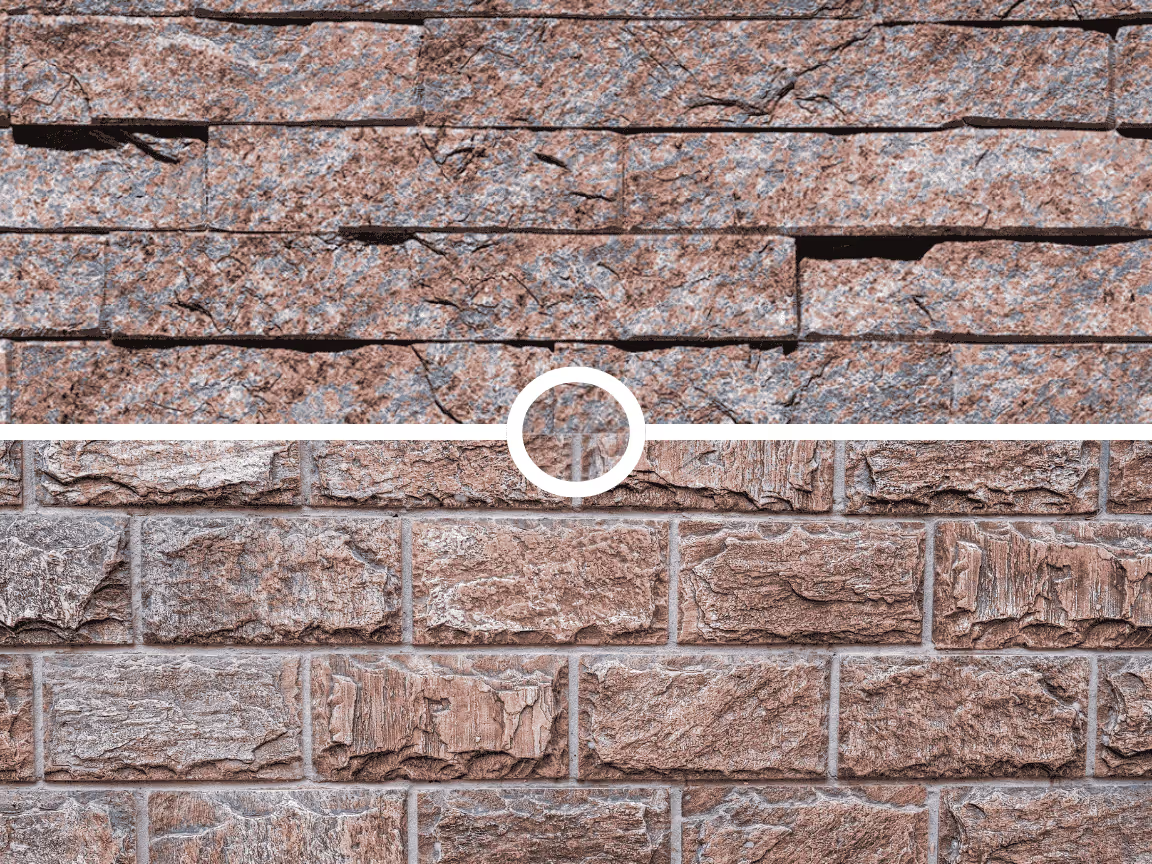
Econiclay Covering vs Traditional Brick
Both Brick and Econiclay Covering offer features that most people look for. They are durable, and beautiful, aesthetic wise, which makes them popular in their own league. How to they differ?
Econiclay Covering is an all-in-one surface finishing material for walls, ceiling, surfaces, and even flooring. It is a sustainable option for traditional materials like bricks, wood, and stone. With new alternative materials like Econiclay, that come in the market, how can you gauge which is better to use for your own application? Let us compare Econiclay Covering with one of the most common traditional materials, Brick. For better comparison, Brick is compared to one type of ECovering that resembles that of Bricks, specifically 35 Piece Stone.
Econiclay Covering vs Traditional Brick
- Composition and Manufacturing
Econiclay Covering has only begun its research and development in the 2000s, as compared to traditional bricks, which dates back to 7500-7000 BC. In terms of material composition and manufacturing, both have similarities and differences. Traditional brick is made from a mixture of clay and water, molded, dried and fired into its desired shape. Other additives are included to improve its properties. They are made by shaping the mixture, dried thoroughly to remove moisture, before being fired into a kiln to improve rigidity and durability of the material. ECoverings are made with modified natural materials consisting of soil, stone powder, mineral powder, clay, and inorganic solid wastes.Econiclay Covering follows a sustainable manufacturing process wherein the factories are operated by self-generated energy, lowering its greenhouse gas emissions and energy use by 94%. Unlike traditional materials, it is mixed together with polymers and reactants to be able to process under low heat and pressure (around 100°C).
- Weight & Thickness
The weight of a brick varies depending on type but it is typically 230 mm x 110 mm x 110 mm, with a weight not exceeding 3 kg. One panel of ECovering is measured 1200 mm x 600mm with thickness ranging from 1-5 mm depending on its dips and grooves.
- Installation
Because of its intricate design, professional workmanship is required when installing bricks, which may be costly, labor-intensive, and time consuming. To combine these together, mortar is used. ECovering are attached to existing surfaces using tile adhesive. It requires less technicalities and professionalism and because of its lightweight nature, it drastically reduces energy consumption in transportation and installation.
- Durability
Bricks are an icon of strength and durability which is why it is a trusted material for centuries. Unlike other man-made materials, it requires less maintenance and can last even for centuries. It slows down the spread of flames and is also non-combustible, which makes it a good choice for both residential and commercial spaces.
- Aesthetics
In terms of aesthetics, both materials are a game changer in their own way. Brick offers a classic aesthetic, bringing nature and tranquility into your own home. On the other hand, ECovering is a versatile material that mimics the appearance and texture of various traditional materials like wood, concrete, stone, and brick.
- Cost
Brick has a higher upfront cost because of the added labor and structural support on top of the materials. The value added to your home, low maintenance, and durability eventually offsets this investment. Econiclay Covering, on the other hand, is a cheaper, alternative material if you want to mimic the look and brick of natural materials. It is durable nonetheless, and is high sustainable, which is a modern feature of construction.
Both Brick and Econiclay Covering offer features that most people look for. They are durable, and beautiful, aesthetic wise, which makes them popular in their own league. Before deciding on a material, weigh down your options and needs. If you want a classic, trusted material for longer investments like the home, then brick may be just for you. But if you’re looking for decorative panels or just want a cheaper alternative, then Econiclay Covering is your material.
Decocity offers two of the best selling Brick alternative swatches from Phomi 35 PIece Stone: Tunguska Yellow and Multicolored Rust. As one of the trusted wall and ceiling panel suppliers in the Philippines, you are guaranteed quality materials for longer use. For concerns and inquiries, you may contact us through the following contact details and social media channels:

0998 979 7659 / 0998 961 7502
📧 sales@decocity.com.ph
Facebook: Decocity
Instagram: decocity_ph